

General
 September 2026
Why Is My Website Not Generating Leads? A Diagnosis in Order
Before redesigning anything, find out whether your problem is traffic or conversion. Most businesses guess wrong and rebuild the half that was already working.


Local service businesses have a demand curve nothing else does. Snow falls and everyone calls in the same forty-eight hours; the grass grows all summer and nobody thinks about it in December. The site is not a brochure — it is a dispatch tool.
Two questions dominate: do you cover my address, and can you come when I need you. A site that makes someone hunt for either loses to the competitor whose phone number was easier to tap.
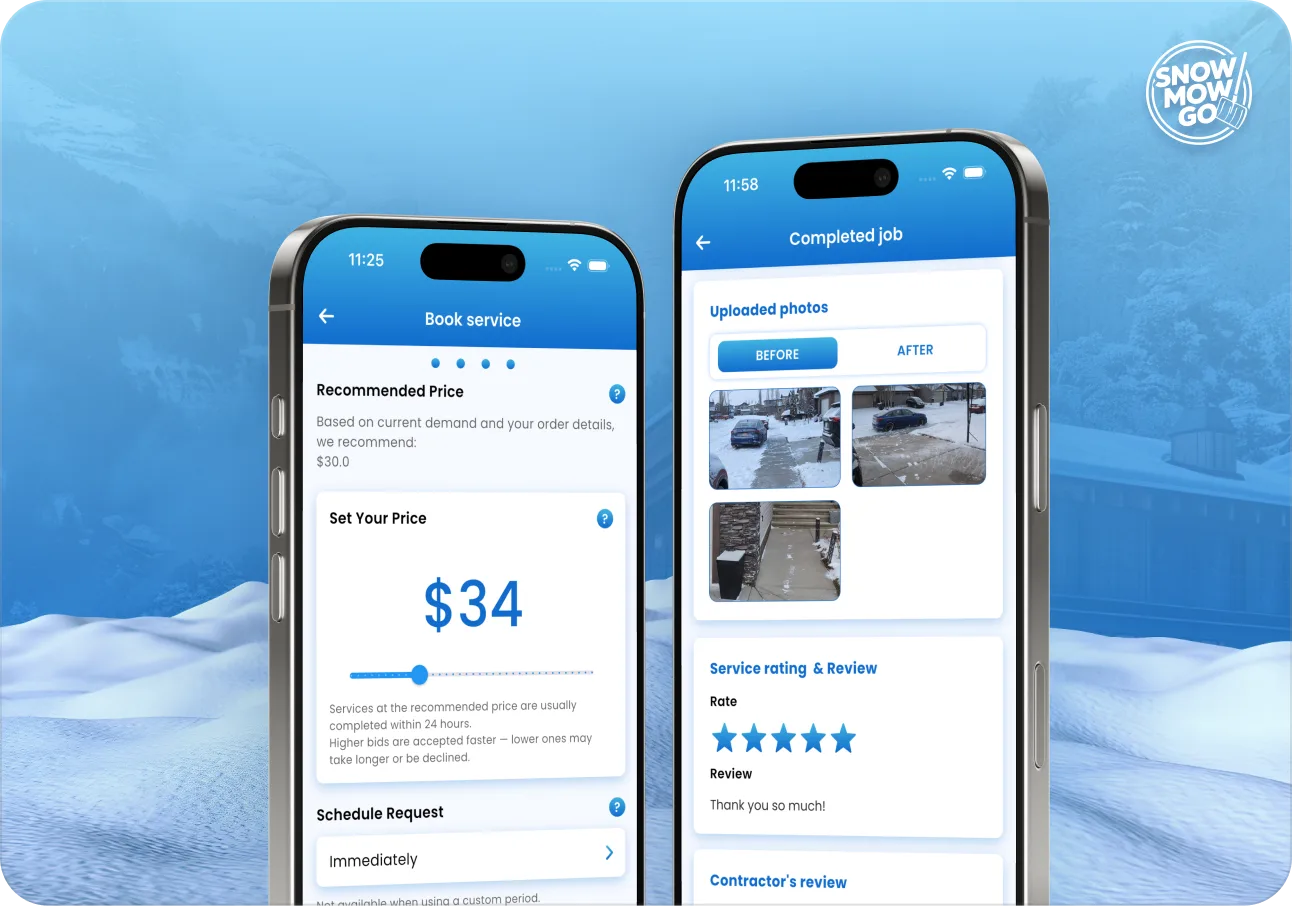
I built an on-demand platform connecting homeowners with contractors for snow removal, lawn mowing and seasonal yard maintenance, with one-off and recurring bookings — and an equipment catalogue site built during the Ukrainian blackouts, where being light and fast was not a nicety.
"Do you cover my address" is the first question and usually the last one a bad site answers. Put the area on the first screen, or let someone check it in one action.
Some jobs are one-off, some repeat all season. That is a scheduling model, not a contact form, and it has to be decided before the design.
Zones, time windows and which services are active right now change constantly. If any of that needs a developer, the site is wrong by the second week of the season.
Your customer is standing in a driveway on mobile data looking at a problem. Big tap targets, a phone number that dials, and a page that loads on a weak signal.
No service area anywhere on the site, so half the enquiries are outside it
A contact form as the only channel, when this audience phones
Seasonal services left visible out of season, generating enquiries you cannot fulfil
Prices hidden entirely, in a market where people are comparing three quotes today
Availability hard-coded, so the owner cannot close a slot when the crew is full
A heavy site that will not load on a weak mobile signal, which is where it is used

Full-service website development includes: design, HTML coding, admin panel development, and SEO optimization. Ongoing website support is also provided. Check more inside.

Custom mobile and web applications designed for seamless performance, user engagement, and business growth.

Professional blog development tailored to your brand — fast, responsive, and SEO-optimized for growth.
Tell me what the site has to do. You get an honest range the same day.
 Discuss project
A form is enough if you dispatch by phone anyway. A booking system pays off once you have recurring customers or more than one crew, because the scheduling is the business.
Show ranges. In a market where people collect three quotes in an afternoon, no price means no call — and ranges filter out the jobs you do not want.
Build it in. Services should be switchable so out-of-season offerings come down without a developer, and the first screen changes with the season.
A service site with area, prices and a form starts around $600-800. A platform with accounts, scheduling and recurring bookings starts around $2,000.
September 2026Before redesigning anything, find out whether your problem is traffic or conversion. Most businesses guess wrong and rebuild the half that was already working.
 September 2026
Two to ten weeks, depending on type. But the calendar is decided less by development speed than by how fast decisions and content come back from your side.